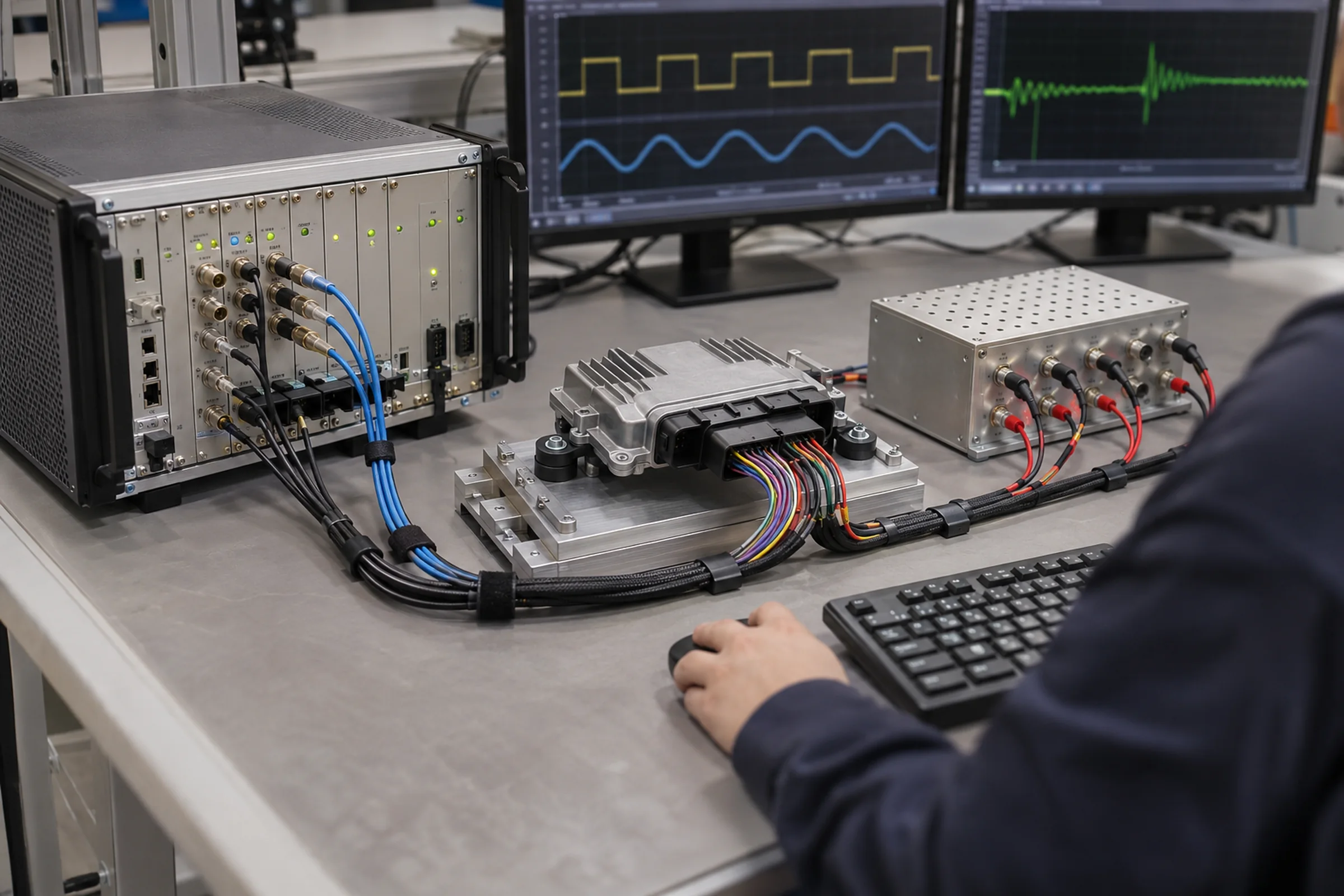
A chain of accountable functions
A practical control loop contains sensing, signal validation, parameter estimation, decision logic and an actuator. Errors in any stage can propagate. Good architecture defines bounded parameters, fallback states, supervision and how the system behaves when external connectivity disappears.
Stimulation is not simply connectivity
Electrical, optical and other forms of stimulation face therapy-specific constraints: dose, waveform, anatomical target, timing, tissue response and durability. Wireless powering can reduce reliance on internal batteries in research devices, but does not remove the need for safety-case engineering.
Examples from research
A 2025 Nature Electronics paper examined a programmable ultrasonic implant for chronic-pain research. A 2026 study explored a wirelessly powered, light-controlled bioresorbable stimulation system. Both illustrate possible architectures, not general clinical claims for all indications.
Operational maturity
Monitoring, software assurance, verification and cybersecurity become integral when external settings change therapeutic activity. Commercialization depends on a clearly established indication and a rigorous demonstration of benefit and risk for that indication.
ENGINEERING CONSIDERATIONS
What robust development must address
- Actuation requires safety limits and verified local fallback behavior
- Clinical evidence is indication-specific
- Security and power interruptions cannot be afterthoughts
Practical development should connect measurable device requirements to a defined intended use and appropriate evidence. Research demonstrations and commercial medical-device claims must be assessed on their own terms.
PRIMARY SOURCES