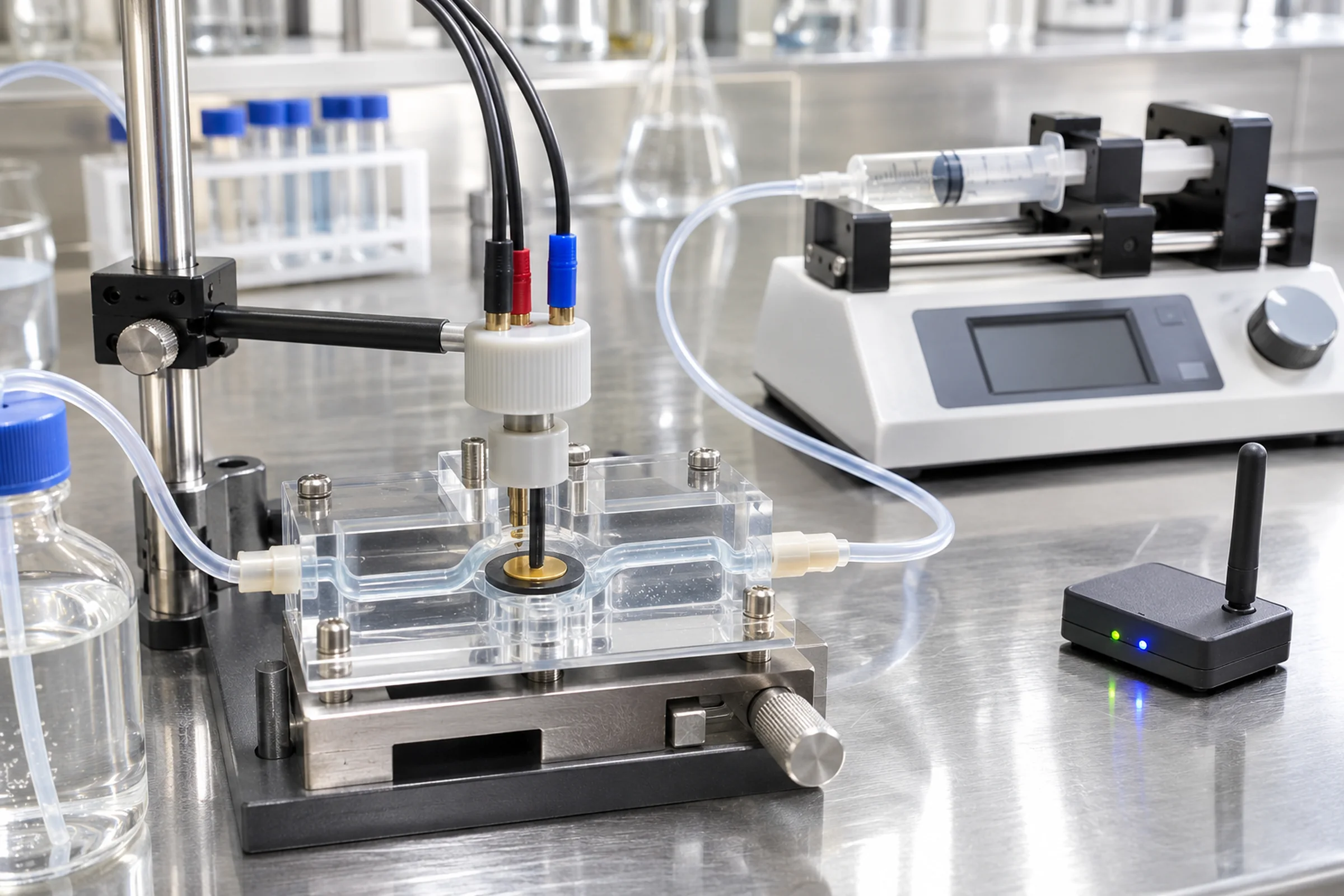
What a measurement represents
Electrochemical platforms may probe local ion or metabolite levels; optical systems can estimate tissue oxygenation using wavelength-dependent signals. Neither modality automatically yields a direct diagnosis: calibration, confounding effects and patient context determine usefulness.
Wireless operation and sampling
Miniaturized sensor nodes often prioritize periodic measurement, digital conversion, low-power transmission and stable output despite motion and tissue changes. The data path must preserve traceability from raw readings to reported values, including drift and quality flags.
2026 research examples
Recent publications describe wireless electrochemical probes that profile deep-tissue metabolites and multiwavelength implantable oximetry that addresses blood-volume confounding. These are technology research cases whose maturity must be assessed separately from approved clinical products.
Clinical-grade reliability
Sensor packaging, biofouling, calibration lifetime, sterilization and extraction of meaningful trends shape translation. A sensor that works over a short controlled observation period may face different challenges over months or years.
ENGINEERING CONSIDERATIONS
What robust development must address
- Calibration drift and biofouling can affect long-term meaning
- Biological signal interpretation needs context
- Measurement reproducibility matters more than a headline sensitivity
Practical development should connect measurable device requirements to a defined intended use and appropriate evidence. Research demonstrations and commercial medical-device claims must be assessed on their own terms.
PRIMARY SOURCES