The channel is not free space
Biological tissue has wavelength-dependent electrical properties; it loads and attenuates antennas differently from air. Implant depth, orientation and nearby materials can shift matching and reduce link margin. Bench-top communication rates cannot simply be carried over to realistic anatomy.
Power and bandwidth co-design
Higher throughput can increase receiver and transmitter energy demand. Channel count, sample rate, compression and duty cycle form a joint design problem: a neural recorder may need substantial data handling, while a low-rate chemical sensor may communicate only periodic calibrated values.
Coexistence and security
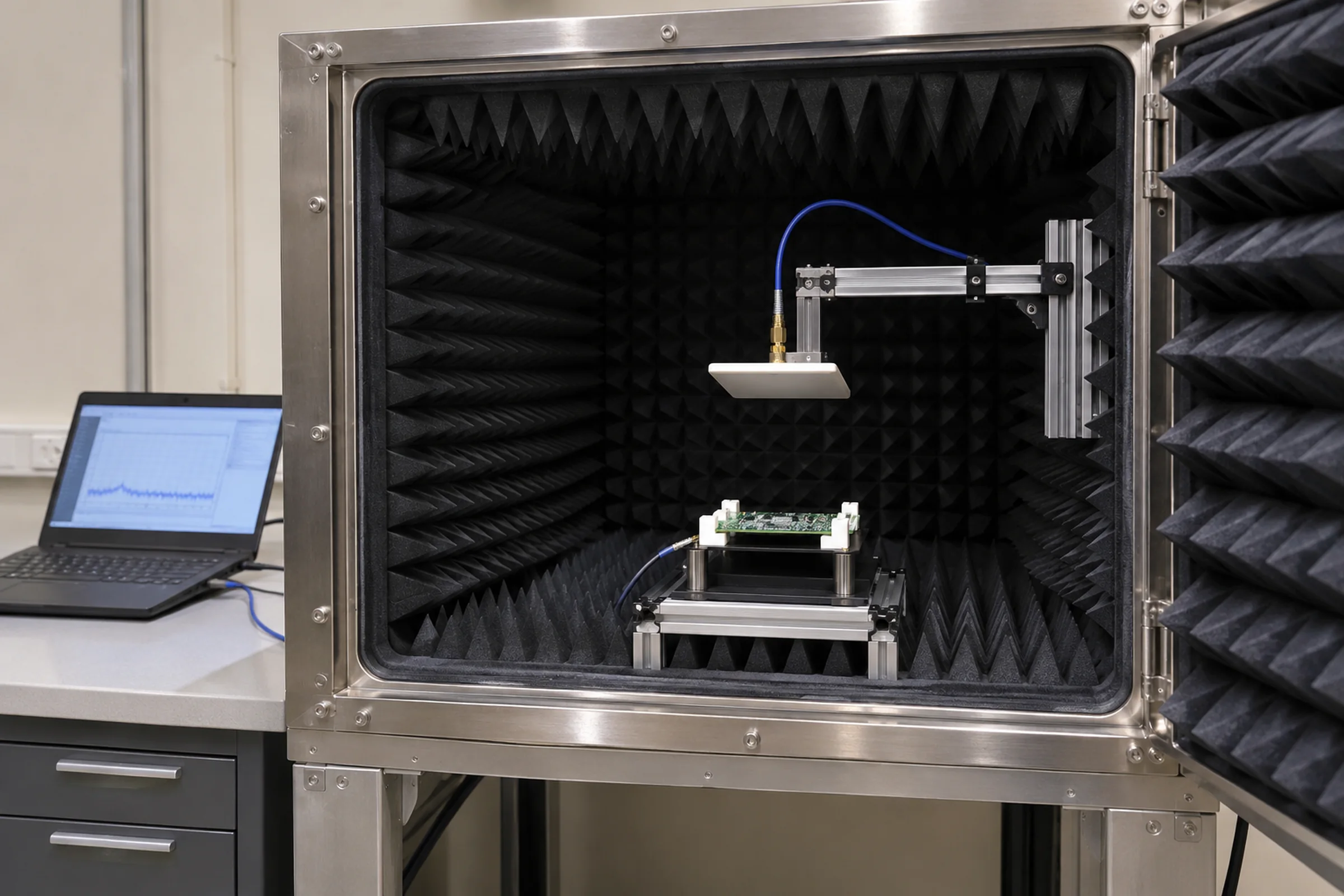
Medical wireless systems must tolerate expected RF environments and manage essential performance when interference appears. Authentication, update controls, device pairing and appropriate encryption are relevant when external commands can alter device behavior. FDA guidance explicitly addresses coexistence, quality of service, security and electromagnetic compatibility.
Resilient operation
Engineers should define the response to packet loss, delayed commands, depleted power and external programmer unavailability before deployment. For safety-critical functions, the implant must have well-defined local behavior rather than relying on a perfect continuous connection.
ENGINEERING CONSIDERATIONS
What robust development must address
- Body loading and attenuation vary with anatomy
- Interference and coexistence need tested margins
- External command surfaces create cybersecurity responsibilities
Practical development should connect measurable device requirements to a defined intended use and appropriate evidence. Research demonstrations and commercial medical-device claims must be assessed on their own terms.
PRIMARY SOURCES