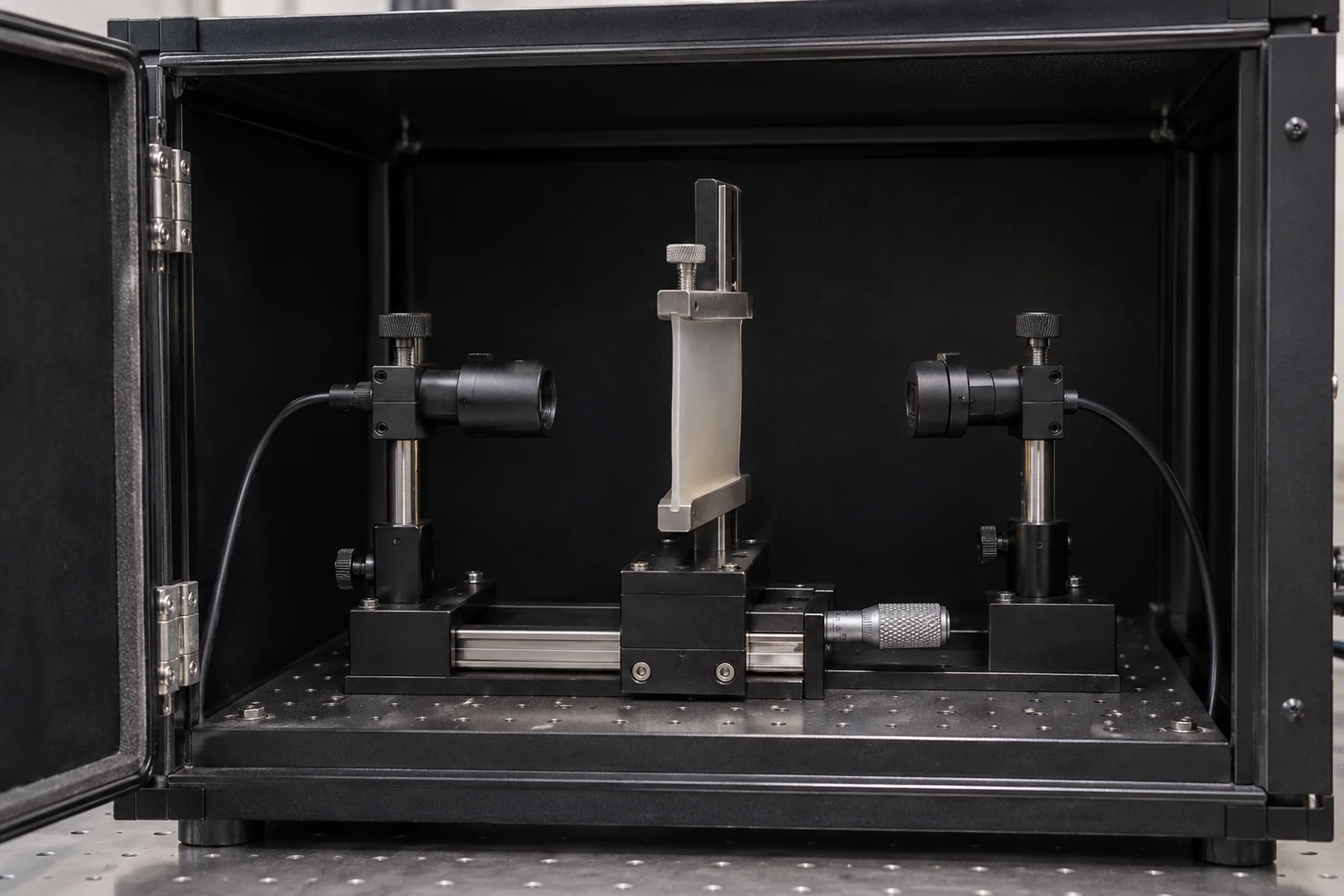
The transmission window
Infrared emitters and photodetectors can exchange data through tissue in certain experimental configurations. Biological optical windows do not eliminate absorption or scattering; usable depth and reliability depend on wavelength, skin characteristics, geometry and device architecture.
Where optics can help
Optical receivers and transmitters can be comparatively compact and may avoid some RF antenna constraints. A link can be attractive for short transcutaneous distances or specialized system designs, though robust alignment and motion tolerance must be demonstrated.
Beyond a single link demonstration
A credible design characterizes bit error rate, tissue phantom variability, source efficiency, modulation choices, exposure limits and environmental light. The external interface must also have a usable position and reproducible coupling.
Commercial relevance
Optical links are an engineering option for constrained implanted devices, not a universal replacement for RF or acoustic communication. They are especially relevant to companies designing hybrid links and specialized miniature electronics, where several modalities can complement each other.
ENGINEERING CONSIDERATIONS
What robust development must address
- Light scattering limits depth and directional precision
- Optical safety and source heating require assessment
- Movement and skin variability change link margin
Practical development should connect measurable device requirements to a defined intended use and appropriate evidence. Research demonstrations and commercial medical-device claims must be assessed on their own terms.
PRIMARY SOURCES