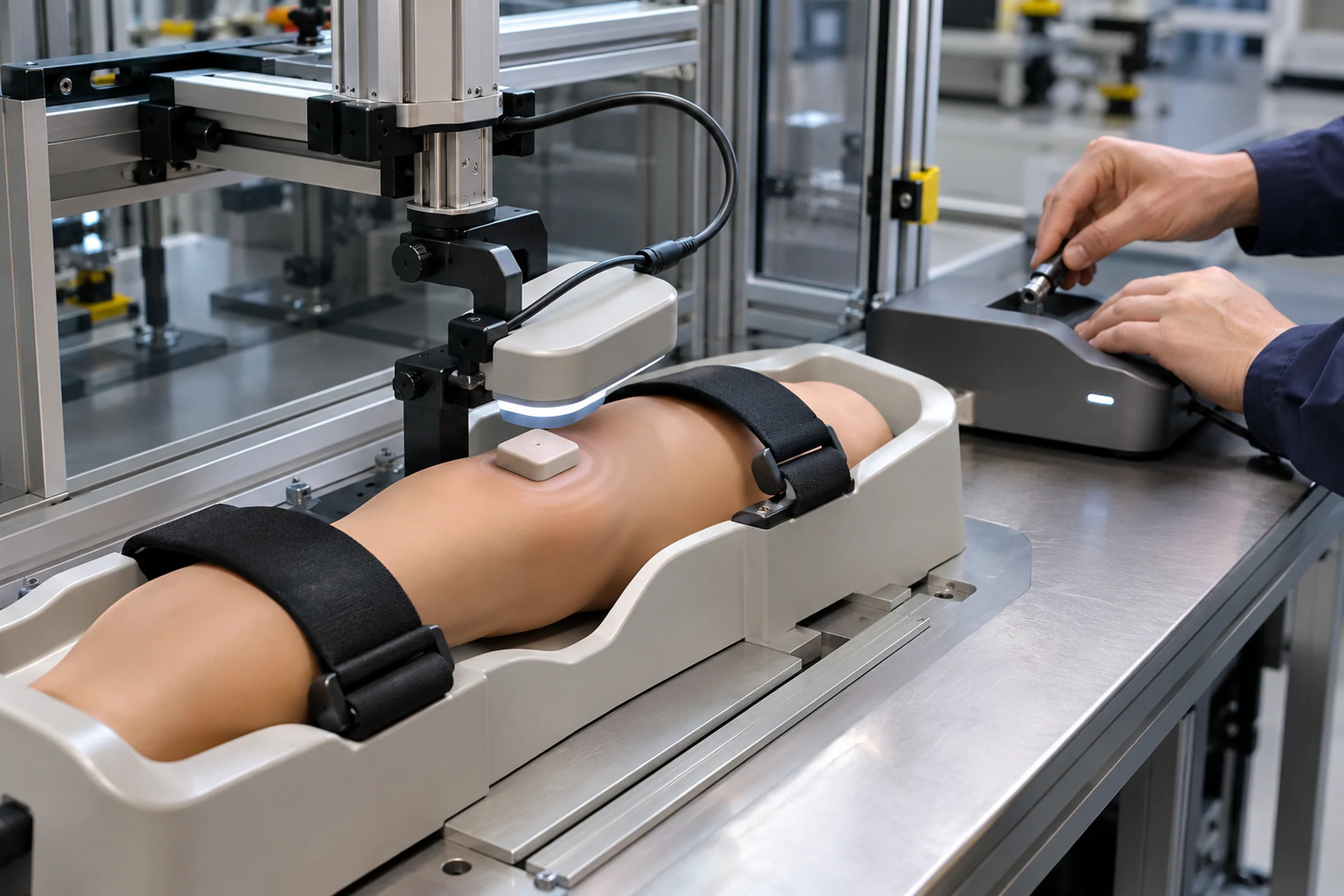
Build from the intended function
Choose sensing or therapeutic objectives before selecting link modality. The needed measurement bandwidth, stimulation duty cycle, depth, allowable size and operating duration drive the electronics and antenna/transducer requirements.
Design the budgets together
Energy harvesting, storage, processing, telemetry, thermal dissipation and sealing all share space and constraints. A component-level improvement may lose value if it increases package size, requires frequent alignment or complicates clinical handling.
External hardware is not peripheral
Wearable relays, charging applicators, clinician programmers, patient interfaces and secure update systems are part of end-to-end performance. An implant may depend on them for routine use; their setup, contact and failure recovery belong in the design requirements.
An evidence-led design spiral
Strong development proceeds through simulation, benchtop prototypes, realistic tissue models, controlled preclinical studies where appropriate, design verification and clinical evidence for the defined use. This sequencing prevents a flashy technical demonstration from being mistaken for a complete device platform.
ENGINEERING CONSIDERATIONS
What robust development must address
- Optimize total system behavior rather than isolated component records
- Define safe response to energy/data loss
- Hardware, software and intended workflow must be co-designed
Practical development should connect measurable device requirements to a defined intended use and appropriate evidence. Research demonstrations and commercial medical-device claims must be assessed on their own terms.
PRIMARY SOURCES