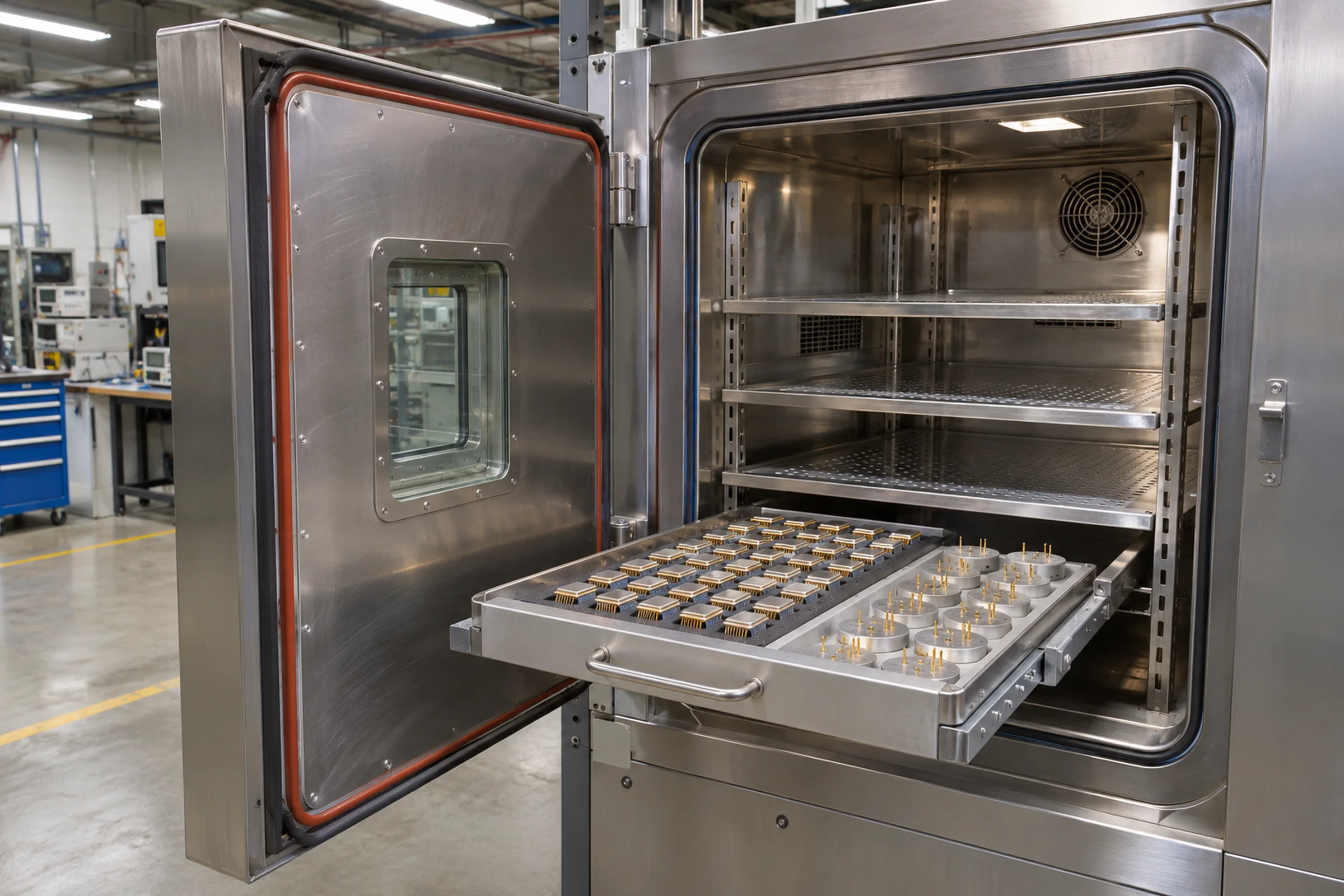
The materials system
Ceramics, metals, thin-film coatings, elastomers and adhesives are selected for a particular duration and tissue environment. Their interactions with sterilization, mechanical strain and moisture are as important as headline biocompatibility of any individual ingredient.
Long-term electrical integrity
Interconnect feedthroughs, encapsulation interfaces and microelectrode surfaces may become failure sites. Accelerated immersion can help screen designs but cannot by itself prove a specified chronic lifetime without justified acceleration models and corroborating evidence.
Soft and transient options
Flexible and bioresorbable electronics are active research areas, especially where temporary function may avoid a retrieval procedure. Degradation products, timing, stability during intended use and mechanical matching must be evaluated for each specific construction.
Validation is design-specific
FDA guidance referencing ISO 10993-1 emphasizes biological evaluation within a risk-management process; assessment depends on contact, materials, duration and intended use. A generic claim of “biocompatible” is therefore insufficient without a corresponding evidence package.
ENGINEERING CONSIDERATIONS
What robust development must address
- Package leaks and feedthrough failures can dominate lifespan
- Accelerated aging needs defensible correlation to use conditions
- Biological evaluation depends on the intended device and contact duration
Practical development should connect measurable device requirements to a defined intended use and appropriate evidence. Research demonstrations and commercial medical-device claims must be assessed on their own terms.
PRIMARY SOURCES