How acoustic energy is received
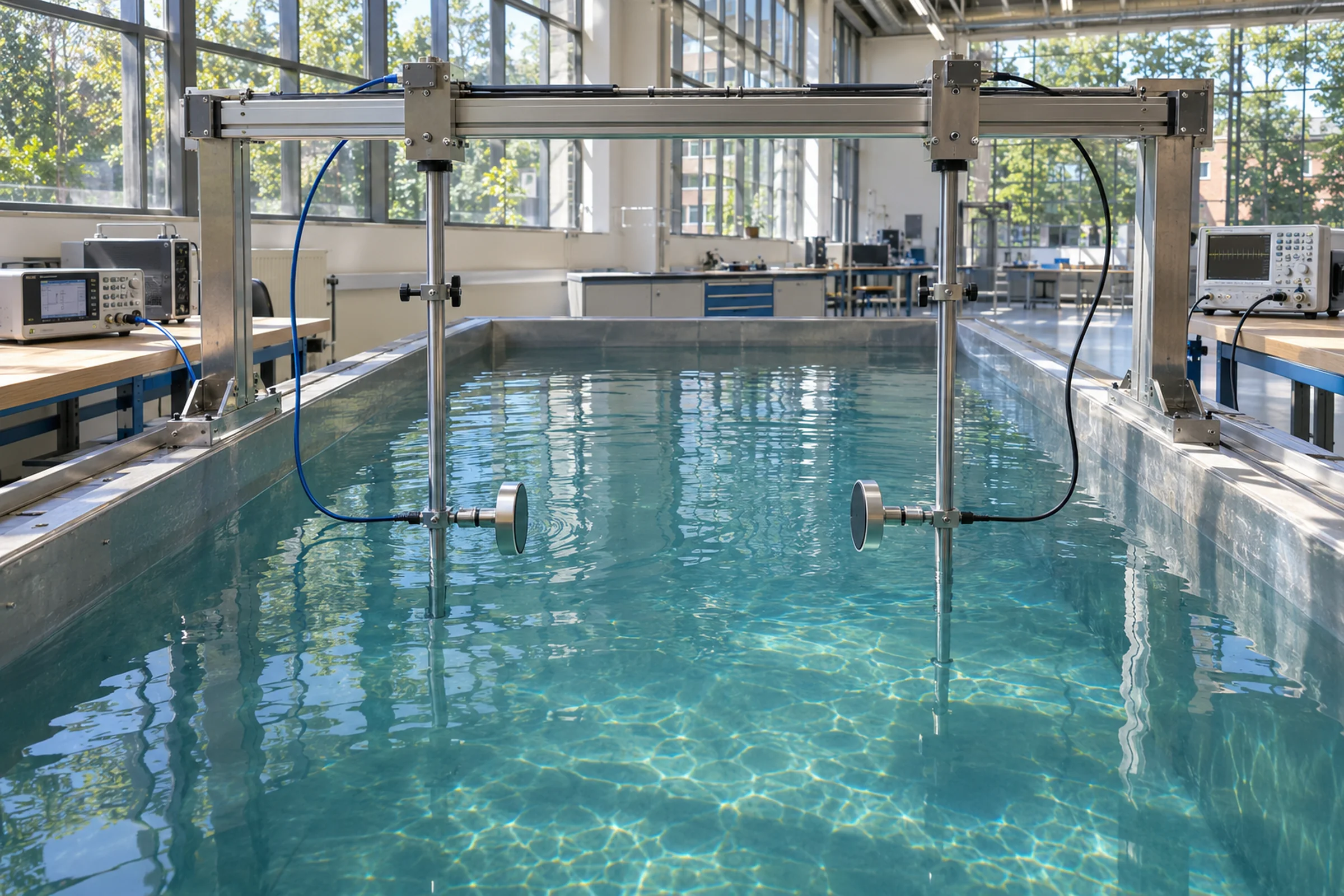
An external transducer launches acoustic waves through a coupling medium and tissue. A piezoelectric receiver converts mechanical motion into electrical energy that downstream circuits condition. The route requires careful matching among transmitter, tissue, receiver geometry and implant electronics.
How depth, path and movement affect delivered energy
Tissue depth, acoustic path, bone interfaces and movement affect delivered intensity. Steering and adaptive focusing are active research topics, but clinical positioning is not automatically solved by a laboratory phased array. Operating frequency, device dimensions and total exposure must be considered together.
Programmable devices
Peer-reviewed research has explored acoustic wireless powering coupled to programmable electrical stimulation in chronic-pain contexts. Such demonstrations indicate technical potential; they are not a universal safety or clinical effectiveness claim for every indication, anatomy or operating duration.
Product translation
A credible engineering roadmap includes acoustic phantom characterization, performance under anatomical variation, heat and mechanical-exposure analysis, stable control during movement, and recovery behavior when coupling drops. Integration with external wearable hardware is as much an interaction-design challenge as an energy-transfer challenge.
ENGINEERING CONSIDERATIONS
What robust development must address
- Acoustic propagation depends on tissue and coupling
- Misalignment and intermittent contact affect operation
- Safety assessment is specific to exposure, anatomy and device
Practical development should connect measurable device requirements to a defined intended use and appropriate evidence. Research demonstrations and commercial medical-device claims must be assessed on their own terms.
PRIMARY SOURCES